I have spent several years working as a residential cleaning professional in San Diego, where I regularly help homeowners maintain kitchens that experience heavy everyday use. My work has taken me into modern apartments, older family houses, rental properties, and larger homes with custom cooking areas. Each kitchen has its own cleaning challenges, from stubborn grease around cooking equipment to water stains near expensive countertops. I have learned that good kitchen cleaning requires more than making visible surfaces look tidy because the condition of less noticeable areas also affects the overall result.
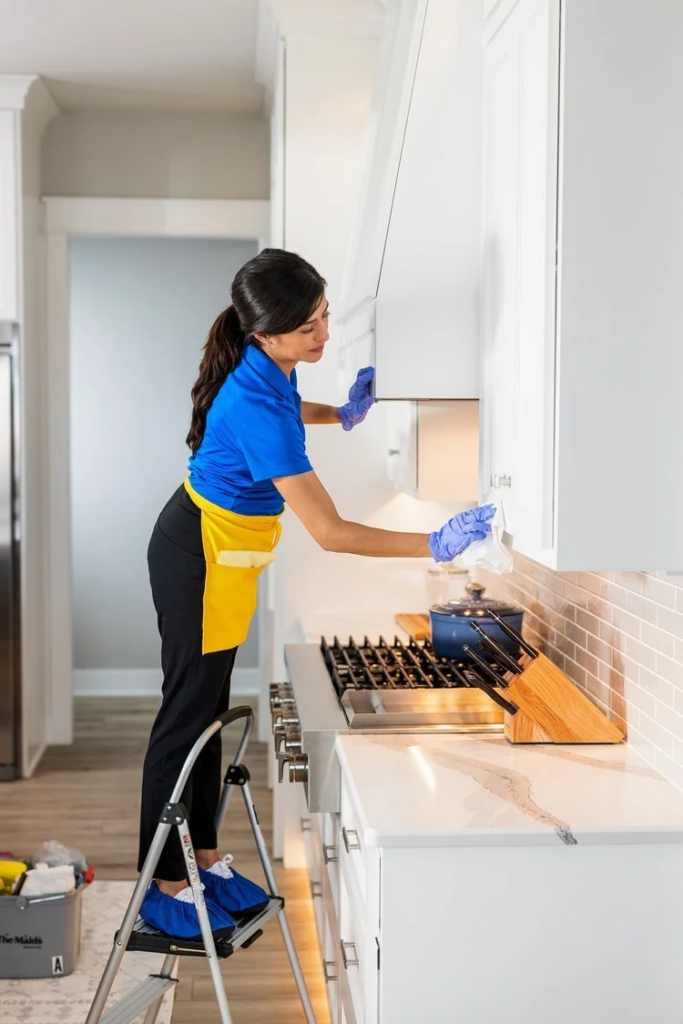
Understanding What Makes a Kitchen Difficult to Clean
I often notice that homeowners underestimate how much residue cooking can leave behind. Frying food releases grease particles that settle on nearby surfaces, while boiling water creates moisture around cabinets and backsplashes. Food preparation also produces crumbs, spills, and sticky marks that can become harder to remove if they are ignored. These problems develop gradually, which explains why a kitchen can look clean from a distance while still needing considerable attention.
In one property I cleaned during the summer, the homeowner regularly wiped the counters but had little time for the surrounding cabinets. After several months, the doors closest to the stove had developed a sticky layer that attracted dust. I cleaned a small section first to check how the finish responded to the product. Once I confirmed it was suitable, I worked across the remaining doors using a soft cloth and controlled amounts of moisture.
Kitchen size also affects the cleaning process. A large cooking area with an island, several storage cabinets, and multiple appliances can require considerably more time than a compact apartment kitchen. I usually divide larger spaces into manageable sections so that I can complete each area properly. This also helps me avoid overlooking corners or surfaces that are easy to miss.
Getting the Most From a Professional Cleaning Appointment
I recommend discussing the required cleaning tasks before arranging a professional visit. Some homeowners need help maintaining an already clean kitchen, while others want accumulated grease and neglected surfaces addressed in greater detail. These are different types of appointments and should be planned accordingly. I always ask about the condition of the appliances, cabinets, floors, and countertops before estimating the time involved.
Homeowners researching local cleaning options can consider a San Diego kitchen cleaning service when looking for assistance with household maintenance. I suggest reviewing the available services and confirming which kitchen tasks are included in the requested appointment. Particular attention should be given to oven interiors, refrigerator shelves, cabinet interiors, and other areas that may require additional work. Clear expectations help prevent confusion once the cleaning begins.
I also believe that professional experience with different household materials is valuable. Granite countertops, marble surfaces, painted cabinets, and stainless steel appliances should not all receive the same treatment. Some cleaning products can damage protective finishes or leave permanent marks if they are used incorrectly. I prefer checking the manufacturer’s recommendations and testing unfamiliar products before treating a large surface.
Preparation can make a cleaning appointment more productive. I usually recommend removing groceries, dishes, and personal belongings from the counters before the cleaner arrives. This creates enough working space to clean the entire surface without repeatedly moving household items. If a particular appliance or storage area needs extra attention, mentioning it beforehand is helpful.
Cleaning Cabinets and Removing Old Cooking Residue
Cabinet doors are among the first places I inspect when entering a kitchen that needs detailed cleaning. The area surrounding handles often collects fingerprints, cooking oils, and dust. Cabinets positioned near the stove may also develop a greasy film that ordinary household wiping does not completely remove. I use a suitable cleaning solution and work carefully to avoid affecting the original finish.
Wooden cabinets require special attention because excessive moisture can damage certain finishes. I avoid soaking the surface and use a slightly damp microfiber cloth instead. For stubborn residue, I apply an appropriate product according to its instructions and remove any remaining cleaner afterward. Drying the surface helps prevent moisture-related problems.
I also inspect the upper edges of cabinets when they are safely accessible. These areas are frequently overlooked because they are outside the normal line of sight. Cooking residue can combine with dust and form a sticky layer over time. A suitable cleaning method can remove the buildup without requiring unnecessary scrubbing.
Drawer interiors deserve attention as well. Small food particles often collect beneath utensils, while spilled ingredients may remain inside storage compartments. When interior cabinet cleaning is included, I recommend emptying the affected drawers first. This allows the cleaner to reach the corners and wipe the surfaces properly.
Giving the Stove and Range Hood Proper Attention
I consider the cooking area one of the most demanding parts of kitchen cleaning. Burnt food, oil splashes, and hardened residue can accumulate around burners and control knobs. I allow the equipment to cool completely before beginning and check the manufacturer’s instructions for appropriate cleaning methods. This is especially important with glass cooktops and appliances that have delicate finishes.
For gas stoves, I pay attention to removable grates and accessible burner components. These parts may require separate cleaning, depending on their material and the manufacturer’s guidance. I avoid forcing components into place or using sharp objects to remove hardened residue. Careful handling prevents damage and makes future maintenance easier.
The range hood is another area I rarely ignore. Its exterior can become greasy, particularly around buttons and the underside of the unit. Filters may also collect cooking residue and require washing or replacement according to the manufacturer’s instructions. I explain when filter maintenance falls outside the scope of an ordinary surface cleaning appointment.
Backsplashes behind cooking equipment often need extra work because oil droplets can stick to tile, grout, and decorative surfaces. I select the cleaning product according to the material and pay attention to the edges surrounding electrical outlets. These surfaces should be cleaned carefully without allowing liquid to enter electrical openings. A clean backsplash also improves the appearance of the entire cooking area.
Maintaining Countertops, Sinks, and Kitchen Fixtures
Countertops receive frequent contact with food, cooking utensils, grocery bags, and household equipment. I first identify the surface material before choosing a cleaner because different finishes have different maintenance requirements. Natural stone, engineered quartz, and laminate should not automatically be treated with the same products. Following suitable care instructions helps preserve their appearance.
I spend extra time around sink fixtures because water marks and food residue often collect in small spaces. The faucet base, drain opening, and edges of the basin can become dirty even when the main sink appears clean. I use separate cleaning cloths for the sink and food preparation surfaces to avoid transferring residue. Drying the fixtures afterward helps reduce visible water spots.
Refrigerator handles and cabinet pulls are also worth regular attention. They receive repeated contact throughout the day and can collect fingerprints and grease. I include these frequently touched surfaces in my routine cleaning process. The same applies to microwave buttons and dishwasher handles.
For refrigerator interiors, I recommend removing expired food and wiping fresh spills before they become difficult to clean. Removable shelves and drawers can be washed separately when the appliance instructions permit it. I also inspect the door seals because small crumbs and sticky residue can collect in their folds. Keeping these areas clean makes ordinary refrigerator maintenance easier.
Managing Floors and Areas Behind Appliances
Kitchen floors collect dirt from shoes, food preparation, and regular household movement. I normally sweep or vacuum before mopping to remove loose crumbs and dust. This prevents debris from spreading across the floor during wet cleaning. I also pay attention to corners and the edges beneath accessible cabinets.
Tile floors sometimes develop dirty grout lines near the stove and sink. I use suitable products and a soft brush when these areas need additional attention. For laminate and vinyl flooring, I control the amount of water used because moisture can affect certain joints and edges. The cleaning technique should always suit the floor material.
Small gaps behind movable kitchen equipment can contain surprising amounts of dirt. Crumbs and food particles may collect around refrigerators, kitchen carts, and countertop appliances. I clean accessible spaces whenever it is safe to move the equipment. Heavy appliances should not be moved casually because their electrical, gas, or water connections may create additional risks.
I also check the area around trash containers. Food residue can leak from bags and leave sticky marks on the surrounding floor or cabinet surfaces. Cleaning the container itself is useful when it is included in the household’s cleaning routine. A properly maintained waste area helps prevent unpleasant odors from spreading through the kitchen.
Creating a Practical Routine Between Cleaning Visits
I always encourage homeowners to maintain a few simple habits between professional appointments. Wiping countertops after preparing food, rinsing the sink, and cleaning fresh spills can prevent many common problems. These tasks take very little time when handled regularly. Waiting until several weeks of residue have accumulated makes the work considerably harder.
For households that cook frequently, I recommend checking the stovetop and backsplash several times a week. Cabinet handles and appliance exteriors can be wiped whenever visible marks appear. Floors may need daily sweeping in homes with children, pets, or frequent visitors. A more detailed cleaning appointment can then focus on stubborn grease, cabinet buildup, and neglected areas.
I also recommend keeping cleaning supplies organized rather than purchasing a different product for every surface. A few suitable microfiber cloths, a gentle surface cleaner, dish soap, and an appropriate floor cleaner can handle many routine tasks. Separate cloths should be used for counters, sinks, and floors. Cleaning chemicals should remain in their original containers, and incompatible products must never be mixed.
After working in different San Diego properties, I have found that maintaining a kitchen becomes much easier when cleaning is treated as an ongoing household task. Professional assistance is useful for areas that require additional time, experience, or specialized products. I recommend discussing the condition of the kitchen and the exact tasks required before selecting a service. With consistent maintenance and occasional detailed cleaning, homeowners can keep their kitchens pleasant, hygienic, and ready for everyday cooking.
Leave a Reply